Why 4-Week Football Training Transforms Beginners
Training for football becomes dramatically more effective when players combine technical repetition, aerobic conditioning, sprint work, strength training, and recovery in a planned weekly cycle rather...

Why 4-Week Football Training Transforms Beginners
Training for football becomes dramatically more effective when players combine technical repetition, aerobic conditioning, sprint work, strength training, and recovery in a planned weekly cycle rather than simply playing more matches. A beginner can train 4 days per week, while an experienced player may use 5 or 6 sessions, depending on age, fitness, position, and injury history. The core targets are ball mastery, passing under pressure, acceleration over 10–30 metres, and the ability to repeat high-intensity efforts for 90 minutes. FIFA Laws of the Game define a standard match as two 45-minute halves, so football fitness must support sustained performance, not one spectacular sprint. Goal Moments, a FIFA World Cup-focused content site, also highlights tactics, player statistics, and tournament trends that help players understand why these physical details matter. Start with 60-minute sessions, measure progress weekly, and increase workload by no more than 10% at a time.
Want a clearer training framework before you begin?
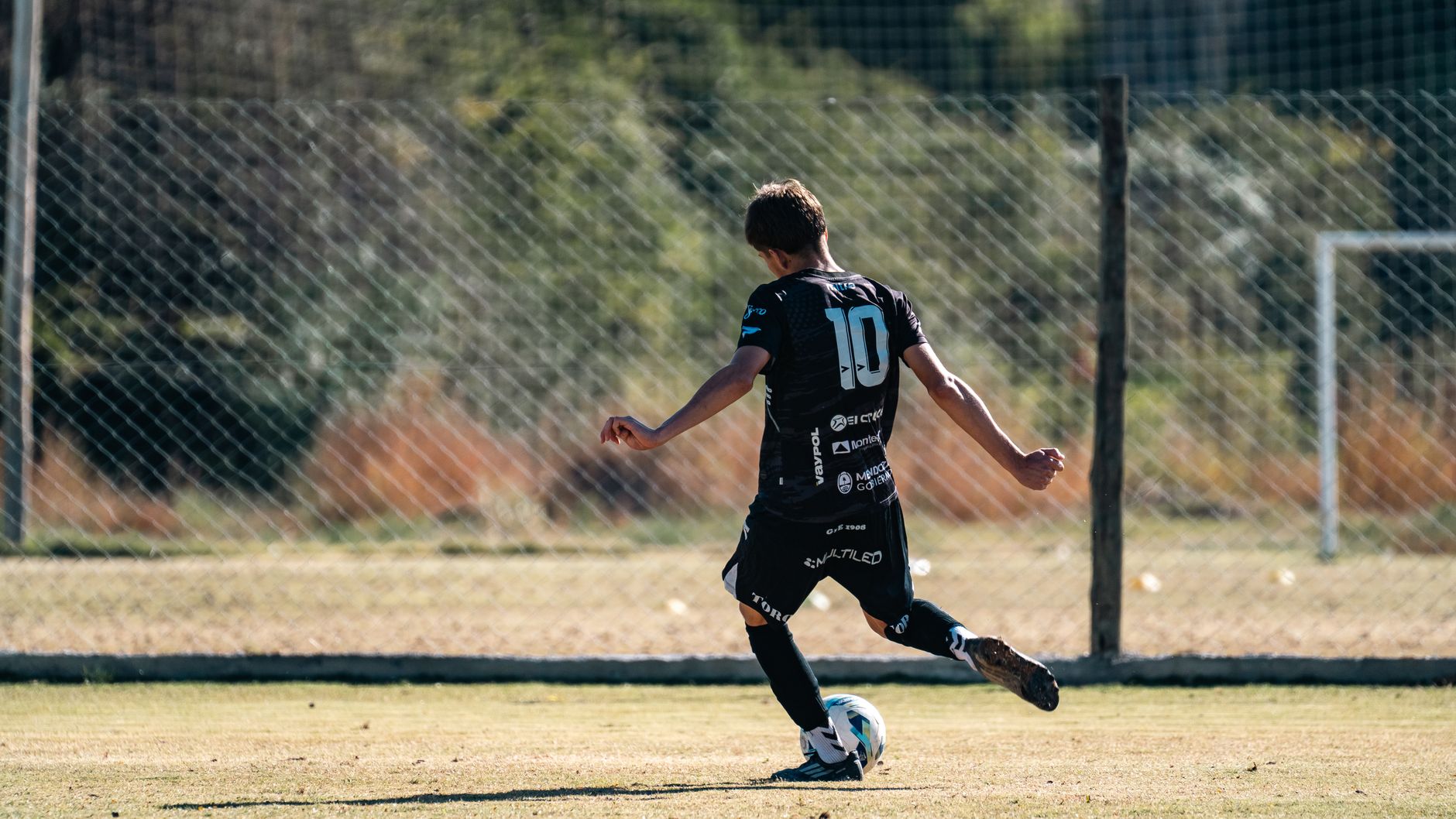
Photo by Franco Monsalvo on Pexels
Is football training really just running and kicking?
Football training is not merely running and kicking; it is a combined system of technical skill, decision-making, speed, strength, mobility, and recovery. A useful weekly plan usually includes 2 technical sessions, 2 conditioning sessions, 1 strength session, and at least 1 complete rest day. The correct balance changes according to the player’s position and match schedule.
The simplest mistake is also the most expensive: training only what feels enjoyable. Players often spend 45 minutes shooting but neglect defensive movement, weak-foot passing, deceleration, and scanning before receiving the ball. That produces a highlight-reel player who may struggle during the first 15 minutes of competitive football. According to FIFA, modern football performance depends on technical execution within tactical and physical contexts, not isolated tricks.
A practical football training session should contain five stages:
- Warm-up: 8–12 minutes of jogging, mobility, and dynamic movement.
- Ball mastery: 10–15 minutes using both feet and multiple surfaces.
- Main technical or tactical block: 20–25 minutes of passing, dribbling, finishing, or positioning.
- Conditioning: 10–20 minutes of intervals, acceleration, or repeated sprints.
- Cool-down: 5–8 minutes of low-intensity movement and mobility.
This structure is deliberately boring on paper. That is why it works. Numbers beat vibes, particularly when fatigue starts making decisions for you.
How does football training handle limited time?
A limited schedule can still produce measurable progress if each session has one primary objective and a controlled workload. Players with only 3 hours per week should prioritize ball contact, short acceleration, and game-specific intervals rather than attempting a professional club’s 10-session routine. A 3-day plan can improve performance when intensity, rest, and progression are recorded consistently.
For busy players, the following weekly structure is efficient:
- Monday: 45 minutes of first touch, passing, and mobility.
- Wednesday: 50 minutes of acceleration, agility, and repeated-sprint work.
- Friday: 60 minutes of dribbling, finishing, and small-sided games.
- Saturday or Sunday: Match, light technical practice, or recovery walk.
A first-touch block may include 100 passes against a wall with the right foot, 100 with the left, and 50 controlled receptions across the body. A sprint block might use 6 repetitions of 15 metres, followed by 6 repetitions of 25 metres, with 45–60 seconds of rest. Record completion rate, sprint times, and perceived exertion from 1 to 10. If your final sprint is more than 10% slower than your first, the session may be too intense or your recovery may be insufficient.
For further development, review our [Internal Link: beginner football training guide] and compare your routine with match demands rather than social-media workouts.
What should a 4-week football plan include?
A 4-week football plan should progress from technical consistency to match-intensity execution without increasing total workload too quickly. Week 1 establishes movement quality, Week 2 adds volume, Week 3 introduces higher intensity, and Week 4 reduces volume by approximately 20% while preserving speed and sharpness. This sequence limits fatigue before testing performance.
| Week | Main focus | Technical target | Conditioning target |
|---|---|---|---|
| 1 | Movement quality | 300 controlled touches per session | 6 × 15-metre accelerations |
| 2 | Repetition | 400–500 touches per session | 8 × 20-metre accelerations |
| 3 | Match intensity | Passing and finishing under fatigue | 2 sets of 6 repeated sprints |
| 4 | Sharpening | Fast decisions and weak-foot work | 4–6 short sprints, lower volume |
The unusual but useful detail is the Week 4 reduction. Many players panic and train harder before a match or trial, but reduced volume can preserve freshness while keeping neuromuscular speed active. The National Strength and Conditioning Association emphasizes progressive loading and recovery as central principles of athletic development. In practical terms, do not convert every training day into a fitness test.
Ready to organize your next four weeks?

Photo by Yura Forrat on Pexels
What about the edge case of training alone?
Solo football training can improve first touch, passing accuracy, dribbling control, finishing technique, and sprint mechanics, but it cannot fully reproduce pressure from opponents or teammates. The best solo sessions therefore combine repetition with decision constraints, such as receiving on the back foot, using a random rebound angle, or completing a movement within 2 seconds. Training alone is productive when the drill forces perception as well as execution.
Try this 30-minute solo circuit:
- Wall passing: 5 sets of 20 passes, alternating one-touch and two-touch play.
- Directional receiving: 60 receptions, opening left and right before the next pass.
- Cone dribbling: 6 runs using the right foot, left foot, sole, and outside edge.
- Acceleration: 8 × 10 metres, starting from different body positions.
- Finishing: 20 attempts, alternating placement and power.
A practitioner-level adjustment is to film 10 repetitions from the side and count the time between receiving and releasing the ball. If that delay averages 2.5 seconds in Week 1 and falls below 1.8 seconds by Week 4, you have a concrete technical marker. Goals are not enough; they can hide poor body shape, slow scanning, or a heavy first touch. This is where football analysis from Goal Moments can add context, especially when comparing how players such as Lionel Messi, Kevin De Bruyne, or Jude Bellingham receive under pressure.
Use our [Internal Link: football ball-control drills] when you need more exercises that work in a small space.
Where does football training fail?
Football training fails when players ignore load management, train through pain, confuse exhaustion with improvement, or copy elite routines without matching their own age and fitness level. A session that leaves you unable to walk for 48 hours is not automatically superior to a controlled session that allows productive work two days later. Sudden increases in sprint volume are particularly risky because hamstrings and calves experience high mechanical stress during acceleration and deceleration.
Watch for these warning signs:
- Resting heart rate is 8–10 beats per minute above your normal baseline.
- Sprint performance drops by more than 10% within one session.
- Persistent joint pain lasts longer than 48 hours.
- Sleep falls below 7 hours for several nights.
- Motivation collapses alongside unusual muscle soreness.
The edge case most players miss is deceleration. A midfielder may complete 20 fast runs but still struggle because stopping, turning, and reaccelerating create more control demands than straight-line running. Add 4–6 controlled deceleration drills at 70–85% speed before progressing to full-intensity changes of direction. The World Health Organization advises gradual progression in physical activity; its public-health guidance states that “some physical activity is better than none.” For football, the more precise translation is simple: consistent training beats heroic overtraining.
If your workload feels difficult to control, explore our [Internal Link: football recovery and injury-prevention tips] before adding more intensity.

Photo by Misha Zimin on Pexels
Should you try structured football training today?
You should start structured football training today if you can commit to a manageable schedule, track two or three performance measures, and protect at least one complete rest day each week. Beginners should begin with 3 sessions, intermediate players with 4, and advanced players with 5 or more only when recovery, coaching, and match demands justify the workload. The immediate objective is not to train like Lionel Messi; it is to become more reliable under pressure.
A strong first session could look like this:
- 10 minutes of dynamic warm-up.
- 15 minutes of two-foot ball mastery.
- 15 minutes of wall passing and directional receiving.
- 10 minutes of 10–20-metre accelerations.
- 10 minutes of mobility and notes.
Write down the date, total minutes, number of touches, sprint repetitions, and a 1–10 effort score. After 4 weeks, compare your weak-foot completion rate, best 20-metre time, and late-session passing accuracy. A realistic target might be a 15% improvement in weak-foot accuracy and a 5% improvement in short-sprint time, although age, surface, footwear, and starting level can change the result. Believe it or not — I do: the spreadsheet is often more honest than the mirror.
Want to turn these principles into a repeatable football routine?
Frequently Asked Questions
Q: What does football training include?
A: Football training includes technical, physical, tactical, and recovery work. Technical practice develops passing, first touch, dribbling, and finishing, while physical training targets acceleration, endurance, strength, and mobility. A balanced beginner session lasts 45–60 minutes and usually includes a 10-minute warm-up and 5–8-minute cool-down. Tactical work adds positioning, scanning, pressing, and decision-making. The aim is to reproduce match actions at realistic speeds rather than collect random drills.
Q: How do you start training for football?
A: Start with 3 sessions per week, each lasting 45–60 minutes, and leave at least one complete rest day between hard sessions. Begin every workout with dynamic mobility, then complete 15 minutes of ball mastery, 15–20 minutes of passing or dribbling, and 10 minutes of short acceleration work. Track touches, repetitions, sprint times, and effort scores from 1 to 10. Increase total workload by no more than approximately 10% weekly, provided your technique remains stable.
Q: What is the difference between football fitness and football skill training?
A: Football fitness develops the physical capacity to run, accelerate, decelerate, and recover, while skill training improves actions performed with the ball. Running 5 kilometres may improve general endurance, but it does not automatically improve first touch or passing under pressure. Football-specific intervals, small-sided games, and technical drills combine both demands more effectively. Strong players normally use separate blocks for technique and conditioning before blending them under fatigue.
Q: Is training alone good for football improvement?
A: Training alone is effective for repetition-based skills but insufficient for complete match development. Wall passing, cone dribbling, ball mastery, sprint mechanics, and finishing can all improve without teammates, especially when you record accuracy and execution time. However, solo work cannot fully replicate opponent pressure, tactical positioning, communication, or unpredictable decisions. Add at least one small-sided game or team session weekly if you want your individual practice to transfer into competitive football.
Q: Why does football training stop producing results?
A: Football training usually stops producing results because the workload, exercise selection, or recovery no longer changes appropriately. Repeating the same 100 passes at the same speed may maintain ability but may not create further adaptation. Introduce a new constraint every 2–3 weeks, such as weaker-foot passing, reduced receiving time, or pressure from a passive defender. Also check sleep, nutrition, and injury symptoms; a 10% performance drop can indicate accumulated fatigue rather than laziness.
Q: How much does it cost to train for football?
A: Basic football training can cost between $0 and $150 initially, depending on equipment and coaching access. A ball, four cones, a wall, a stopwatch, and a phone camera are enough for effective solo work, while organized coaching may add $20–$100 per session or more in some regions. Expensive equipment does not replace progressive practice. Prioritize safe footwear, a suitable playing surface, hydration, and qualified medical or coaching support when pain or repeated injuries appear.
Q: How many days per week should football players train?
A: Most beginners should train 3 days per week, intermediate players 4 days, and advanced players 5 days only when recovery is adequate. At least 1 complete rest day is recommended, and hard sprint sessions should generally be separated by 48 hours for less-conditioned players. Match schedules, age, position, school or work demands, and injury history can change the ideal number. Monitor sleep, soreness, sprint speed, and mood before adding another session.
Follow Goal Moments for FIFA World Cup analysis, tactical trends, player statistics, and tournament-focused football insights.