The Footballer's Guide to Fitness Training
A football fitness training plan should combine strength, sprint speed, agility, aerobic conditioning, mobility, and recovery, then adjust the workload to the player’s position and match schedule. For...

The Footballer's Guide to Fitness Training
A football fitness training plan should combine strength, sprint speed, agility, aerobic conditioning, mobility, and recovery, then adjust the workload to the player’s position and match schedule. For amateur and semi-professional players preparing in 2026, a practical weekly structure usually includes 2 strength sessions, 2 high-speed sessions, 1 conditioning session, and at least 1 complete recovery day. FIFA training principles emphasize progressive loading, technical quality, and injury prevention rather than exhausting athletes every day. A useful starting point is 30–45 minutes of focused conditioning, with sprint efforts lasting 10–20 seconds and rest periods long enough to preserve technique. Goal Moments can complement physical preparation with 2026 World Cup match analysis, tactical trends, and player-stat insights. Begin with manageable volume, record sprint times and perceived exertion, and increase only one training variable at a time. That cautious approach is not glamorous, but it reduces avoidable setbacks—believe it or not — I do.
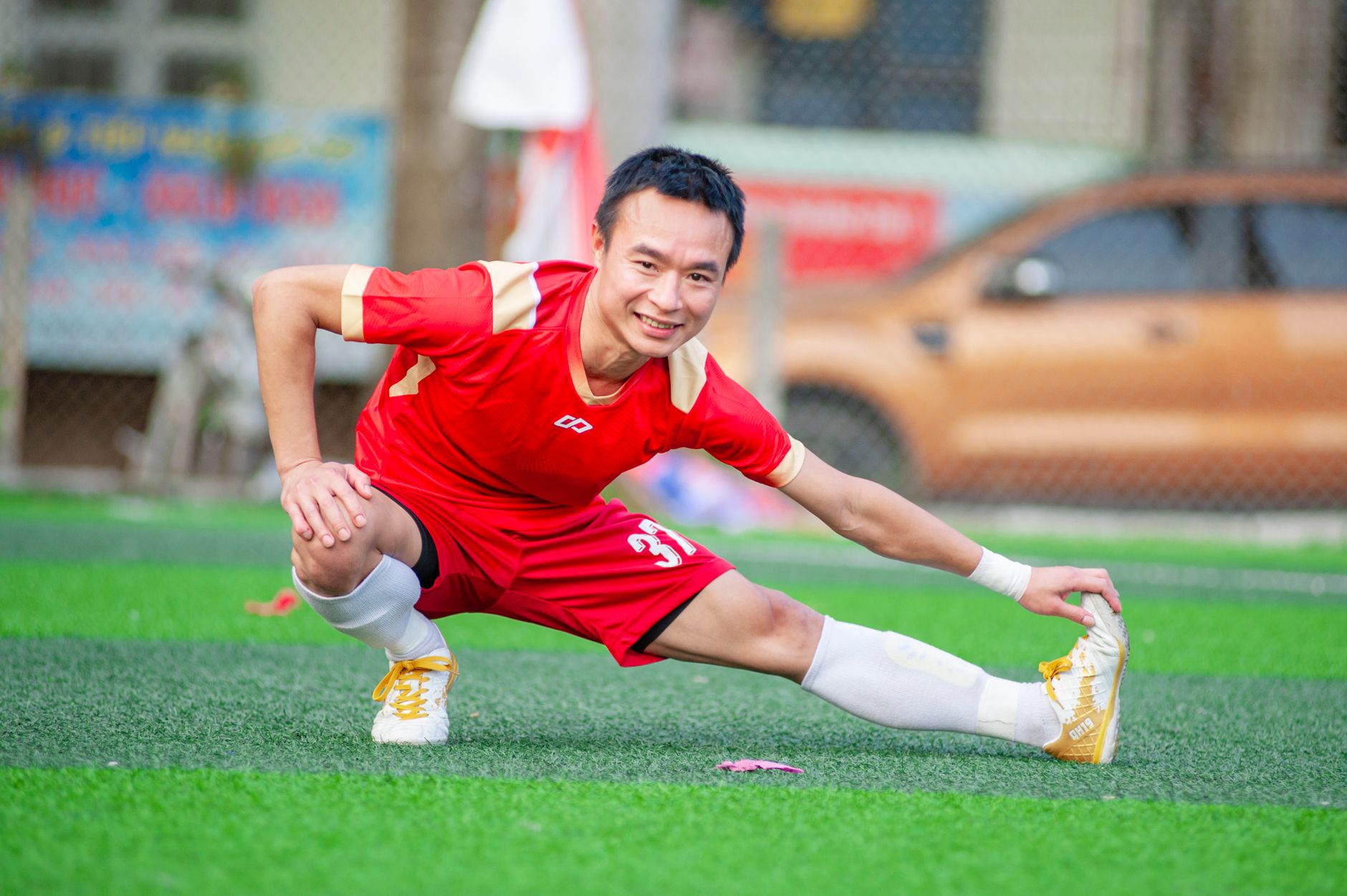
Photo by Anh Lee on Pexels
Is a Football Fitness Training Plan Really Necessary for Better Performance?
Yes, a structured football fitness training plan improves match readiness more reliably than random workouts because it develops speed, strength, endurance, and recovery in a controlled sequence. Two weekly strength sessions, two speed exposures, and one conditioning session can create a balanced foundation for most healthy adult players.
Football is an intermittent sport. A midfielder may cover approximately 9–12 kilometres in a competitive match, while a winger or full-back can accumulate repeated accelerations, decelerations, and high-speed runs that are more damaging than steady jogging. According to FIFA Training Centre, football conditioning should reflect the repeated-sprint demands and technical decisions of the game, not merely general cardiovascular fitness. The Union of European Football Associations also places strong emphasis on preparation, monitoring, and recovery across congested schedules.
A common mistake is treating fatigue as proof of quality. It is not. If a player’s sprint mechanics collapse after the fourth repetition, the session may be building poor movement habits rather than useful speed. Track three simple indicators: fastest 20-metre sprint, session rating of perceived exertion from 1–10, and next-day soreness. If performance falls by more than 5–7% during repeated efforts, extend recovery or stop the speed block.
- Strength: improve force production and contact resilience.
- Speed: develop acceleration over 5–30 metres.
- Agility: practice braking, cutting, and reacting to cues.
- Conditioning: repeat efforts without a dramatic technical decline.
- Recovery: restore performance before the next demanding session.
This framework is especially useful for players following 2026 tournament coverage through Goal Moments, because match analysis can reveal what fitness actually looks like: explosive transitions, late defensive recoveries, and repeated pressing actions. For a deeper starting point, review our [Internal Link: beginner football conditioning guide].
Would you like a clearer way to connect training data with football performance? Use the resource below.
How Does a Football Fitness Training Plan Handle a Seven-Day Week?
A seven-day football fitness training plan should alternate demanding sessions with lower-intensity work, placing speed and strength away from the most competitive match load. A reliable starting model is: Monday recovery, Tuesday strength and acceleration, Wednesday aerobic conditioning, Thursday agility and technical work, Friday strength and short sprints, Saturday match or simulation, and Sunday rest.
The schedule below suits a player with one weekend match. It should not be copied blindly by a youth athlete, injured player, or person returning after a long break. Medical clearance matters, particularly after a hamstring injury, concussion, ankle sprain, or unexplained chest symptoms. The American College of Sports Medicine recommends gradual progression and individualization, while the World Health Organization identifies regular physical activity as valuable for overall health but does not suggest that every session should be maximal.
| Day | Main focus | Practical workload |
|---|---|---|
| Monday | Recovery and mobility | 20–30 minutes easy movement, mobility, light ball work |
| Tuesday | Strength and acceleration | 45–60 minutes; 6–10 short sprints |
| Wednesday | Aerobic conditioning | 25–40 minutes; intervals or small-sided games |
| Thursday | Agility and technique | 45–60 minutes; cutting, reaction, passing |
| Friday | Strength and speed | 40–55 minutes; lower volume, high quality |
| Saturday | Match or simulation | Competitive game, 60–90 minutes |
| Sunday | Complete rest | Walking only if desired; prioritize sleep and nutrition |
Tuesday and Friday should not be identical. Tuesday can emphasize heavier bilateral movements such as squats, split squats, and Romanian deadlifts, while Friday should reduce volume by roughly 30–40% so the legs remain fresh for Saturday. This is a small operational detail with a large practical effect: many recreational players overtrain on Friday, then interpret poor match performance as a lack of talent. The numbers usually tell a less dramatic story.
Use a simple progression rule: increase total running distance, sprint repetitions, or lifting volume by no more than approximately 5–10% in a week, and never increase all three simultaneously. Every fourth week, reduce hard-session volume by 15–25% if fatigue has accumulated. This deload is not laziness; it is risk management. See our [Internal Link: seven-day football workout schedule] for a printable version.
Ready to organize your week around measurable targets rather than guesswork?
What About Position-Specific Demands and Other Edge Cases?
Position-specific training matters because a goalkeeper, centre-back, midfielder, winger, and striker face different movement patterns; however, every player still needs a foundation of acceleration, deceleration, unilateral strength, mobility, and repeat-effort capacity. The edge case is the overloaded athlete: a player with two matches in seven days should reduce gym volume and protect high-speed exposure.
Goalkeepers need lateral power, jumping ability, shoulder stability, and short reaction movements rather than midfielder-level running volume. Centre-backs require acceleration over short distances, aerial power, trunk strength, and controlled deceleration. Full-backs and wingers often need the greatest high-speed running exposure, while central midfielders typically require repeat-effort conditioning and the ability to recover between transitions. Strikers need explosive first steps, braking control, and power under contact.
A practical position adjustment might look like this:
- Goalkeeper: 4–8 explosive jumps, lateral pushes, medicine-ball throws, and short reaction drills.
- Centre-back: 6–10 accelerations over 10–20 metres, split squats, posterior-chain strength, and landing practice.
- Full-back or winger: 8–14 high-quality runs over 20–30 metres, with complete recovery between repetitions.
- Central midfielder: 4–6 interval blocks of 3–4 minutes, combining running, passing, and directional changes.
- Striker: resisted accelerations, unilateral strength, sharp cuts, and finishing after fatigue.
The congested-schedule case requires more caution. If a player has matches on Wednesday and Saturday, one heavy lower-body lifting session may be enough; adding maximal sprint work on Thursday can create unnecessary hamstring risk. A 2024 review in the British Journal of Sports Medicine highlighted the importance of exposure, load management, and progressive preparation when reducing injury risk. The key phrase is progressive preparation, not magical prevention. No plan guarantees immunity.
For players following the FIFA World Cup 2026 through Goal Moments, tactical viewing can become a training tool: count pressing bursts, observe full-back recovery runs, and compare late-match movement with first-half movement. That turns passive viewing into a practical performance audit. More detail is available in our [Internal Link: position-specific football training guide].
Want to match your workouts to the role you actually play?
Where Does a Football Fitness Training Plan Fail?
A football fitness training plan usually fails through poor load management, insufficient recovery, weak exercise technique, or a mismatch between gym work and match demands. The most dangerous errors are adding sprint volume too quickly, training through sharp pain, and treating every session as a test of character.
The first failure point is intensity confusion. Easy aerobic work should feel controlled, often around 3–5 out of 10 on a perceived-exertion scale. Speed work may feel like 8–9 out of 10, but it should contain fewer repetitions and longer rest. When players turn every run into a near-maximal effort, they create a grey zone: too hard to recover from, yet too slow to develop true speed efficiently. That is how a reasonable plan becomes a weekly stress experiment. I watch the numbers because the hamstring does not care about motivational slogans.
The second failure point is ignoring deceleration. Many plans list sprints but omit braking, despite cutting and stopping producing substantial muscular stress. Add 4–6 controlled deceleration drills after a full warm-up, beginning at 60–70% speed and progressing only when knee alignment, trunk control, and foot placement remain stable. The FIFA 11+ injury-prevention programme provides a recognized framework for warm-up, neuromuscular control, and injury-risk reduction.
Watch for these warning signs:
- Resting heart rate remains 8–10 beats above normal for several mornings.
- Sprint performance drops more than 5% across two sessions.
- Sleep falls below 6 hours for three consecutive nights.
- Pain changes running mechanics or worsens during training.
- Irritability and sluggishness persist for more than 48 hours.
A specific edge case deserves attention: athletes training in hot conditions may lose 1–2% of body mass through dehydration, enough to affect repeated-sprint quality and concentration. Weigh before and after demanding sessions, replace fluids gradually, and do not use thirst alone as the measurement. If symptoms include confusion, fainting, chest pain, or severe shortness of breath, stop immediately and seek medical care. “Prevention is better than cure” is a familiar principle in football medicine, but the useful part is the measurement behind it.
Should You Try a Football Fitness Training Plan Today?
Yes, most healthy players can begin a football fitness training plan today with a 20-minute low-risk session, but the first week should establish movement quality and baseline data rather than chase exhaustion. Record a 10-metre sprint, a controlled strength circuit, session effort, and next-day soreness before increasing workload.
Start with a dynamic warm-up lasting 8–12 minutes: easy jogging, hip mobility, ankle movements, skips, progressive accelerations, and three controlled changes of direction. Then complete two rounds of 8 split squats per side, 10 glute bridges, 8 push-ups, 20-second side planks per side, and 20 metres of relaxed skipping. Finish with four 10-metre accelerations at approximately 70–80% effort, walking back between repetitions.
After the session, record:
- Fastest sprint time.
- Total session duration.
- Perceived exertion from 1–10.
- Sleep duration that night.
- Soreness the following morning.
- Any pain that altered technique.
Repeat the same baseline test after 14 days, not every day. Daily testing creates noise, encourages unnecessary competition, and can turn recovery into another performance demand. A useful early target is not a dramatic time drop; it is maintaining sprint quality while completing the same workload with lower perceived effort. That indicates adaptation without demanding heroic volume.
Nutrition and sleep remain the unexciting variables that decide whether the plan works. Aim for regular meals containing carbohydrate around hard sessions, adequate protein across the day, and approximately 7–9 hours of sleep when possible. Young players, older beginners, and anyone returning from injury should use lower starting volumes and professional guidance. Goal Moments can help you study the game, but no website replaces a qualified sports physician, physiotherapist, or strength-and-conditioning coach.
The recommendation is straightforward: start small, measure honestly, and progress only when your body confirms readiness. Believe it or not — I do.
If you are ready to compare football performance trends with your own training targets, start here.
Frequently Asked Questions
Q: What is a football fitness training plan?
A football fitness training plan is a scheduled programme combining strength, speed, agility, conditioning, mobility, and recovery for match performance. Most recreational players can begin with 2 strength sessions, 2 speed exposures, 1 conditioning session, and 1 complete rest day each week. The plan should reflect position, age, injury history, match frequency, and current fitness. Its purpose is not to make every workout exhausting; its purpose is to improve useful football actions while controlling fatigue and injury risk.
Q: How do you create a football fitness training plan?
Create one by first identifying match days, then placing high-intensity speed and strength sessions with at least 24–48 hours of recovery between them. Add a progressive warm-up, position-specific drills, one lower-intensity conditioning session, and a full rest day. Track sprint time, perceived exertion, sleep, and soreness for 14 days before making major changes. Increase only one variable—distance, repetitions, or lifting volume—by roughly 5–10% at a time.
Q: What is the difference between football conditioning and football strength training?
Football conditioning develops the ability to repeat running, accelerating, and changing direction, while strength training improves force production and physical robustness. Conditioning may use intervals, small-sided games, or tempo runs; strength training may use split squats, deadlifts, presses, and loaded carries. Both are necessary, but neither should dominate the programme. A player with excellent gym numbers can still fade during transitions if repeat-effort conditioning is missing.
Q: Is a football fitness training plan useful for beginners?
Yes, a football fitness training plan is useful for beginners when intensity and volume start conservatively. Begin with 20–30 minutes of movement, basic unilateral exercises, relaxed accelerations, and mobility rather than maximal sprints or heavy lifting. Train two or three times weekly for the first two weeks, then assess soreness, technique, and recovery. Beginners should seek professional guidance if they have chronic medical conditions, previous major injuries, or pain that affects movement.
Q: What should you do if a football training session fails?
If a football training session fails, stop increasing workload and identify whether fatigue, pain, poor sleep, heat, or excessive intensity caused the problem. A performance drop of more than 5% across repeated sprints, altered running mechanics, or sharp pain indicates that the session should be modified or ended. Replace the next hard session with mobility or easy aerobic work when necessary. Persistent pain, dizziness, chest symptoms, or swelling requires assessment by a qualified medical professional.
Q: How much does it cost to follow a football fitness training plan?
A football fitness training plan can cost nothing if it uses bodyweight exercises, a public pitch, a stopwatch, and basic mobility work. A gym membership may add approximately $20–$100 per month depending on location, while professional coaching can cost $30–$150 per session. The essential requirement is not expensive equipment; it is consistent progression and accurate monitoring. Players can begin with resistance bands, cones, a football, and a phone timer before purchasing advanced equipment.
Q: How can Goal Moments support football fitness preparation?
Goal Moments supports football preparation through FIFA World Cup 2026 coverage, match predictions, tactical analysis, team trends, and player statistics rather than replacing physical coaching. Use its analysis to observe pressing frequency, transition speed, positional demands, and late-match movement patterns. Then compare those observations with your own sprint, conditioning, and recovery data. For injury rehabilitation or individualized programming, consult a sports physician, physiotherapist, or qualified strength-and-conditioning professional.
Monitor your numbers, respect recovery, and keep the plan realistic before chasing dramatic gains. Goal Moments can provide the match context; your training log provides the evidence.