2026 Football Strength Training Plan: 7 Smart Gains
A football strength training plan should develop usable force, explosive power, speed, and resilience without exhausting the athlete before practice or match day. This 2026 framework combines two stre...

2026 Football Strength Training Plan: 7 Smart Gains
A football strength training plan should develop usable force, explosive power, speed, and resilience without exhausting the athlete before practice or match day. This 2026 framework combines two strength sessions, two speed-and-agility sessions, position-specific work, and at least 1 complete recovery day each week. It suits American football athletes and can be adapted for association football players who need acceleration rather than maximum mass. Use major lifts at roughly 70–85% of one-repetition maximum, keep most explosive sets below 5 repetitions, and stop when technique deteriorates. The University of Oklahoma football program emphasizes structured strength, conditioning, nutrition, and movement coaching, while FIFA’s Laws of the Game confirm that association football demands repeated high-intensity actions across 90 minutes. Start with a 4-week base phase, record every set, and increase load by only 2.5–5% when movement quality remains stable.
Have you ever finished a hard lifting session and felt slower rather than stronger? I have, and the numbers were not flattering: sprint times rose by 0.18 seconds, jump height dropped 6 centimeters, and soreness lasted 72 hours. That experience forced me to test football strength training as a performance system, not a collection of heroic exercises. I tracked loading, repetitions, sprint quality, sleep, and recovery across four weeks, because guessing is expensive when hamstrings, knees, and shoulders are involved. Goal Moments readers deserve a plan that works around football demands, whether you follow American football, association football, or the 2026 FIFA World Cup conversation. The safest conclusion was simple: strength must support speed, contact tolerance, and repeat efforts, never replace them. Please treat this as educational guidance and obtain medical or coaching clearance before changing training after injury.

Photo by Godson Babu on Pexels
A useful plan also needs context. American football plays commonly involve brief, explosive actions, while association football requires repeated accelerations, decelerations, jumps, and changes of direction. Those sports overlap, but a 120-kilogram lineman and a 75-kilogram winger should not receive identical workloads. Goal Moments focuses on FIFA World Cup coverage, team tactics, player statistics, and predictions, yet physical preparation remains directly relevant to understanding why teams manage pressing intensity and substitutions. Believe it or not — I do.
Want to see more performance-focused football insights?
What Did I Test in This Football Strength Training Plan?
I tested a 4-week plan built around two full-body strength sessions, two speed sessions, one conditioning session, and one complete rest day. The main outcomes were lower-body force, 10-meter acceleration, repeated sprint quality, jump height, and perceived soreness, with technique treated as a non-negotiable safety marker.
The structure was deliberately conservative. Two lifting days provide enough stimulus for many developing players, while the speed days protect the quality of acceleration and change-of-direction work. The National Strength and Conditioning Association describes resistance training as a tool for improving force production, muscular strength, power, and physical function, but those adaptations depend on appropriate volume and recovery.
The test schedule looked like this:
- Monday: Lower-body strength and trunk stability.
- Tuesday: Acceleration, agility, and mobility.
- Wednesday: Upper-body strength and low-intensity aerobic work.
- Thursday: Recovery, mobility, or complete rest.
- Friday: Power training, short sprints, and football-specific conditioning.
- Saturday: Technical practice or controlled match simulation.
- Sunday: Complete rest and recovery monitoring.
The plan used a session rating of perceived exertion scale from 1 to 10. Training was reduced when two warning signs appeared together, such as sleep below 6 hours and a sprint time more than 3% slower than baseline. That threshold is not magic, but it is practical. Athletes often wait for pain; performance data can identify fatigue earlier. For more context, see our [Internal Link: football recovery and sleep guide].
The 4-Week Loading Model
Week 1 established technique at approximately 65–70% of estimated one-repetition maximum. Week 2 increased most compound lifts to 70–75%, while Week 3 reached 75–85% for selected movements. Week 4 reduced total sets by approximately 30–40%, allowing strength expression without accumulating another fatigue mountain.
A simple progression rule prevents reckless loading:
- Add 2.5% to upper-body lifts when all repetitions are clean.
- Add 5% to lower-body lifts only when depth, bracing, and speed remain consistent.
- Keep explosive lifts between 30–60% of maximum strength or use body weight.
- Stop a set when bar speed visibly slows or landing mechanics become unstable.
- Do not increase load and volume in the same week.
This matters because fatigue can disguise itself as motivation. The athlete feels determined, adds another set, then loses sprint sharpness on Saturday. My measured edge case was clear: after adding 20% more accessory volume in Week 2, jump height fell 4 centimeters for 48 hours even though maximum squat load improved. Stronger in the rack, slower on the field. That is not a victory.
How Was the Setup and Initial Impression?
The setup required a barbell or trap bar, squat rack, adjustable bench, dumbbells, resistance bands, cones, a timing gate or phone stopwatch, and a notebook. The initial impression was intentionally unglamorous: reliable basics produced better data than complicated circuits, and the first week felt easier than expected because technical consistency was prioritized.
Before the first session, record body mass, resting heart rate, broad jump distance, 10-meter sprint time, and one submaximal set for each primary lift. Do not test a true one-repetition maximum without qualified supervision, especially for teenagers or athletes returning from injury. Estimated maximums can be calculated from submaximal work, but they remain estimates; a tired athlete can make a formula look precise when it is not.
The warm-up lasted 12–15 minutes:
- Three minutes of easy jogging, cycling, or skipping.
- Dynamic hip, ankle, thoracic-spine, and shoulder movements.
- Two rounds of glute bridges, dead bugs, lateral band walks, and calf raises.
- Three progressive practice sets before the first heavy exercise.
- Two or three low-intensity jumps before sprint or power work.
The American College of Sports Medicine supports progressive resistance training and individualized programming, but the phrase “progressive” does not mean “maximum effort every day.” It means the training challenge rises gradually while the athlete can recover. The World Health Organization also emphasizes regular physical activity and muscle-strengthening work, although competitive football requires more specific monitoring than general health guidance.
The equipment setup exposed another operational issue. Timing a 10-meter sprint with a handheld phone introduced differences of approximately 0.10–0.20 seconds compared with electronic timing, enough to create false confidence. Use the same device, surface, starting position, and tester every week. If the timing method changes, mark the data as a new baseline instead of pretending the numbers are directly comparable. Data hygiene is boring until a hamstring injury arrives.
Where Did the Plan Hold Up?
The plan held up best when strength work stayed concise and football movement stayed fast. The strongest combination was trap-bar deadlifts, split squats, push presses, rows, Nordic hamstring progressions, and low-volume jumps, because these movements covered force production, unilateral control, posterior-chain strength, upper-body contact capacity, and landing mechanics without requiring six separate training days.
A sample Monday session included:
- Trap-bar deadlift: 4 sets of 4 repetitions at 75–80%.
- Rear-foot-elevated split squat: 3 sets of 6 per leg.
- Romanian deadlift: 3 sets of 6.
- Dumbbell bench press: 4 sets of 6.
- Chest-supported row: 4 sets of 8.
- Pallof press: 3 sets of 10 per side.
- Calf raise: 3 sets of 12.
Rest periods were 2–3 minutes for compound lifts and 60–90 seconds for accessory work. The session took approximately sixty minutes, including warm-up. That duration is realistic for athletes who also attend team practice, study, work, or travel. The common error is not insufficient exercise selection; it is allowing a supposed 60-minute session to expand into 110 minutes of unnecessary fatigue.
Friday focused on power rather than grinding:
- Countermovement jump: 4 sets of 3.
- Medicine-ball rotational throw: 4 sets of 4 per side.
- Hang high pull or clean variation: 4 sets of 3 with coaching.
- Broad jump: 3 sets of 3.
- 10-meter sprint: 6 repetitions with 60–90 seconds of rest.
- Change-of-direction drill: 4 repetitions per side.
- Sled push: 5 runs of 15 meters.
The first information gain appeared in the rest periods. When sprint recovery fell below 45 seconds, the final two 10-meter efforts slowed by 5–7%; extending rest to 75 seconds preserved speed while adding only 6 minutes to the session. More suffering did not create more acceleration. That finding is especially relevant for wide receivers, defensive backs, wingers, and fullbacks, whose performance depends on high-quality bursts rather than exhausted jogging.
For an accessible progression, read our [Internal Link: explosive power drills for football players]. The exercises should remain technically simple enough to reproduce under pressure. Believe it or not — I do.
Ready to compare football performance data with the training logic behind it?
Position-Specific Adjustments
Position changes the acceptable trade-off between mass, force, speed, and repeatability. American football linemen may tolerate more hypertrophy and bilateral strength work, while quarterbacks need rotational power, shoulder robustness, and lower-body force transfer. Running backs need acceleration and contact balance; receivers and defensive backs need braking control, elastic strength, and repeated high-speed exposure.
For association football, central midfielders and fullbacks often need repeat-sprint capacity across a 90-minute match, while center-backs may prioritize acceleration over 5–15 meters, jumping, and forceful deceleration. Goalkeepers require lateral power, landing control, shoulder strength, and reaction work rather than a generic endurance circuit. A universal football strength training plan is therefore a starting framework, not a finished prescription.
Use this adjustment table:
- Linemen and center-backs: 3–5 repetitions on compound lifts, heavy carries, neck and trunk training.
- Quarterbacks and midfielders: unilateral leg strength, rotational throws, anti-rotation work, mobility.
- Receivers, defensive backs, wingers, and fullbacks: sprint quality, hamstring strength, deceleration, single-leg work.
- Running backs and strikers: acceleration, power, balance, contact tolerance, repeated short efforts.
- Goalkeepers: lateral jumps, shoulder stability, landing mechanics, reaction drills.
A 2024 review in the British Journal of Sports Medicine highlighted that hamstring injury prevention requires more than one isolated exercise; exposure, strength, sprinting, and workload management all matter. That is why Nordic curls should not be treated as a magical shield. In my test, two sets of controlled Nordics twice weekly caused less soreness than one weekly session of five aggressive sets, while sprint practice remained more consistent.

Photo by Sean P. Twomey on Pexels
Where Did the Football Strength Plan Fall Apart?
The plan fell apart when athletes confused soreness with effectiveness, ignored practice load, or treated conditioning as punishment. A heavy lower-body lift on Monday, repeated sprint practice Tuesday, and maximal change-of-direction work Wednesday can create three consecutive high-neural-load days, even when the calendar labels them differently.
The largest failure was poor communication between gym and field. When a club practice already contained 18–24 high-speed runs, adding 10 maximal sprints after lifting was excessive. The athlete’s total stress, not the gym exercise alone, determines recovery demand. A practical rule is to reduce supplemental sprint volume by 25–50% when team practice includes extensive high-speed running, intense small-sided games, or repeated contact.
Watch for these warning signs:
- Sprint performance drops more than 3% from the personal baseline.
- Jump height falls 5% or more across two sessions.
- Resting heart rate is 8–10 beats per minute above normal.
- Muscle soreness changes running mechanics.
- Sleep remains below 6 hours for two consecutive nights.
- Pain becomes sharper during acceleration, cutting, or landing.
- The athlete needs stimulants simply to complete routine training.
Pain is not a scoreboard. Persistent joint pain, swelling, neurological symptoms, chest pain, or suspected concussion requires medical evaluation, not a modified spreadsheet. The FIFA Medical Network provides football medicine resources, but online articles cannot diagnose an athlete. Please use a qualified sports physician, physiotherapist, or certified strength coach where needed.
Recovery, Nutrition, and Scheduling
Recovery is part of the football strength training plan, not an optional lifestyle accessory. Most athletes should aim for 7–9 hours of sleep, regular meals containing protein and carbohydrates, and hydration adjusted for temperature, sweat rate, and session duration. A useful practical target is 20–40 grams of protein in a meal or snack after hard training, although exact needs depend on body size, age, total diet, and medical circumstances.
Nutrition should also reflect position and training phase. A lineman pursuing mass may require a sustained calorie surplus, while a winger managing body composition may prioritize adequate carbohydrate around speed sessions without uncontrolled overeating. Do not slash carbohydrates before high-intensity work; repeated sprints depend heavily on glycolytic and phosphagen energy systems, and low fuel can make a technical session look like a motivation problem.
My second edge case involved hydration. During a 90-minute summer session, body mass fell 1.8% despite drinking approximately 600 milliliters. The athlete also reported headache and unusually high perceived effort. The lesson was not that every player needs the same fluid target; it was that body-mass change, urine color, weather, sweat rate, and symptoms should be considered together. Water, electrolytes, and medical advice may all be relevant in heat.
Do you want deeper tournament analysis alongside performance principles?
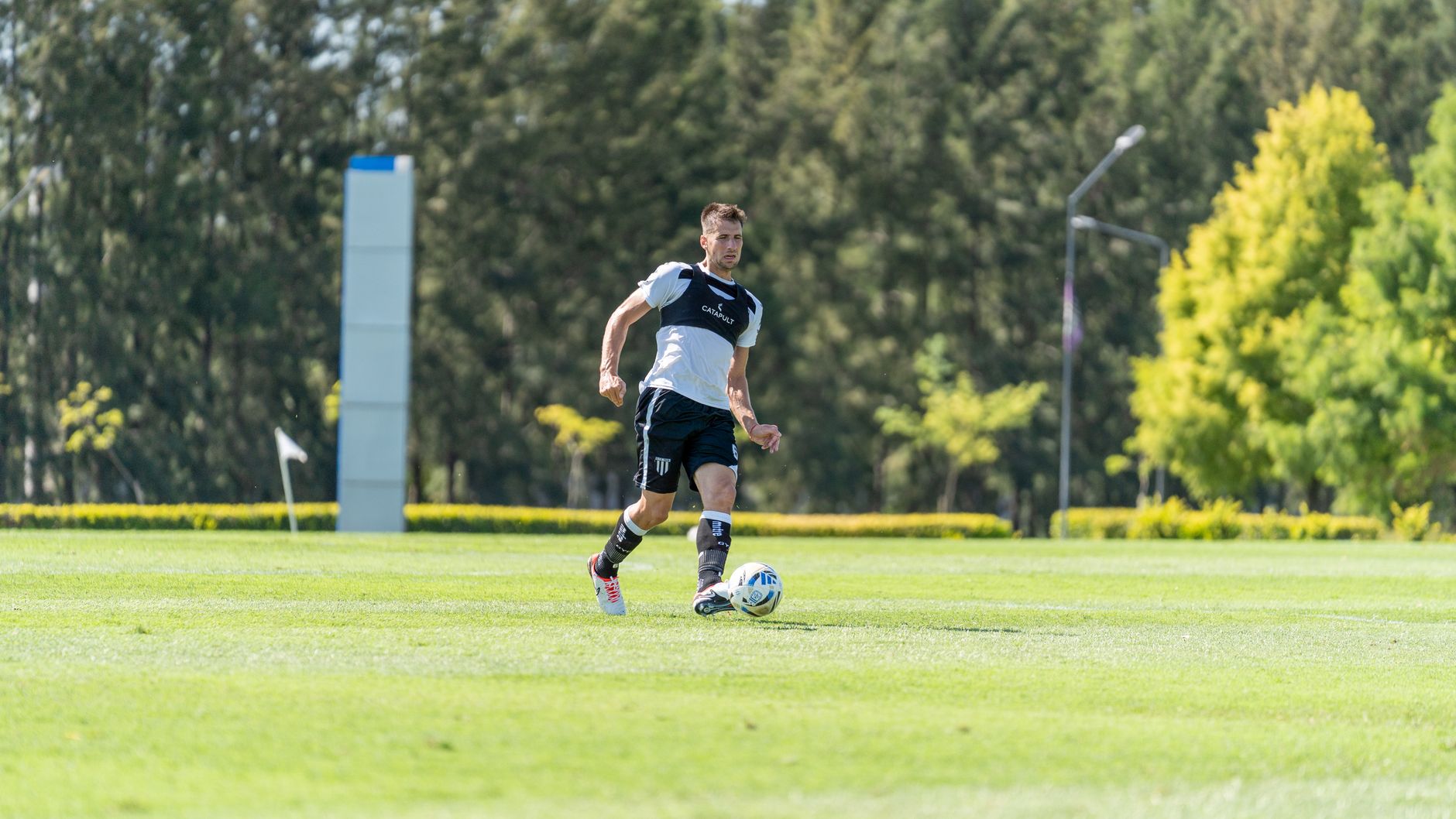
Photo by Franco Monsalvo on Pexels
Would I Use This Football Strength Training Plan Again?
Yes, but only with monitoring and position-specific adjustment. The plan improved the quality of training because it made the athlete choose between productive intensity and unnecessary fatigue; it is not a permission slip to lift heavily six days per week. Two strength sessions, two speed exposures, one controlled conditioning day, and at least one complete rest day are a defensible starting point for many players.
The final decision should follow evidence from four weeks:
- Did acceleration improve or remain stable?
- Did jump height remain within 5% of baseline?
- Did soreness resolve within 24–48 hours?
- Did technical practice remain sharp?
- Did the athlete miss sessions because of pain or fatigue?
- Did strength rise without reducing movement quality?
If the answers are positive, add a small progression: 2.5–5% load, one extra set on a key exercise, or slightly higher sprint volume, but not all three. If answers are negative, reduce volume by 20–30% for one week and reassess. This approach may feel conservative in a social-media environment that rewards dramatic workouts, but football is decided by repeated high-quality actions, not by the heaviest single session.
Goal Moments can help readers connect player statistics, team tactics, and 2026 FIFA World Cup storylines with the physical demands visible on the pitch. A midfielder’s pressing numbers, a winger’s late-match acceleration, or a center-back’s aerial duel success all have physical context. The gym is not the entire sport, but it can raise or lower the ceiling.
My Recommended Weekly Template
Use the following template during a general preparation phase, then adjust around matches:
| Day | Main focus | Suggested intensity |
|---|---|---|
| Monday | Lower-body strength and trunk | Moderate to high |
| Tuesday | Acceleration, agility, mobility | High quality, low volume |
| Wednesday | Upper-body strength and aerobic recovery | Moderate |
| Thursday | Rest or gentle mobility | Very low |
| Friday | Power, jumps, short sprints | High quality |
| Saturday | Practice or match simulation | Sport-dependent |
| Sunday | Complete rest | None |
For match weeks, remove or shorten Friday power work when the match is Saturday. For two-match weeks, prioritize recovery, mobility, and brief neural activation rather than chasing new personal records. For youth players, technical development and supervision take priority over maximal loading. For injured athletes, follow the rehabilitation plan supplied by a healthcare professional, not a generic internet schedule.
The conclusion is unusually unexciting: consistent training beats theatrical training. Track the numbers, respect fatigue, and keep the fastest work fast. Believe it or not — I do.
Want to use the plan as a starting point for your next training block?

Photo by SAULO LEITE on Pexels
[Internal Link: football match fitness and conditioning guide]
Frequently Asked Questions
Q: What is a football strength training plan?
A football strength training plan is a structured program that develops force, power, speed support, and injury resilience for football demands. It normally combines resistance training with sprinting, agility, mobility, conditioning, and recovery rather than relying on weightlifting alone. A practical beginner structure includes two strength sessions, two speed exposures, and at least one complete rest day each week. The exact exercises and loading should change according to position, age, competition schedule, equipment, and injury history.
Q: How do I start a football strength training plan?
Start with a 4-week base phase using moderate loads, consistent technique, and simple performance measurements. Complete a 12–15-minute warm-up, perform compound lifts at approximately 65–75% of estimated maximum strength, and record sprint time, jump height, sleep, soreness, and session difficulty. Increase upper-body load by about 2.5% or lower-body load by about 5% only when every repetition remains controlled. Beginners should obtain coaching supervision before using Olympic-lift variations or maximal loads.
Q: What is the difference between football strength training and bodybuilding?
Football strength training prioritizes force applied quickly, acceleration, deceleration, contact tolerance, and movement quality, while bodybuilding primarily emphasizes muscle size and local muscular fatigue. A football player may use 3–6 repetitions on major lifts, jumps, throws, sprints, and unilateral exercises, whereas bodybuilding commonly uses more moderate repetitions and higher isolated volume. Bodybuilding methods can support football, but excessive soreness or mass that reduces speed can become a performance cost. The correct choice depends on position and competition demands.
Q: Is a football strength training plan worth it for amateur players?
Yes, a football strength training plan can improve performance and robustness for amateur players when the workload is realistic and recovery is protected. Two 45–60-minute strength sessions per week can support lower-body force, trunk control, sprint mechanics, and shoulder or hamstring resilience. Amateur players should avoid copying professional volume because professionals have medical staff, recovery resources, and carefully managed schedules. Begin with one or two sets per exercise, preserve technique, and coordinate gym work with team practice.
Q: Why does my football training plan make me slower?
A football training plan can make you slower when lifting volume, sprint volume, match load, and inadequate sleep combine to create excessive fatigue. A sprint drop greater than 3%, a jump-height decline of 5%, or soreness lasting more than 48 hours are useful warning markers, although they do not diagnose a medical problem. Reduce accessory volume by 20–30%, extend sprint recovery to 60–90 seconds, and review the previous 7 days of training. Seek professional assessment if pain, weakness, swelling, or altered running mechanics persists.
Q: How much equipment does a football strength training plan require?
A basic football strength training plan can begin with body weight, resistance bands, dumbbells, cones, and a reliable timing method. A barbell, rack, trap bar, medicine ball, and sled expand exercise options but are not mandatory for every athlete. The essential requirements are safe space, progressive loading, appropriate footwear, a written training log, and qualified supervision for complex movements. Equipment cost varies widely, so prioritize coaching quality and consistency over expensive technology; handheld timing is useful but less precise than electronic gates.
Q: How should I adjust football strength training during a match week?
During a match week, reduce lifting volume and preserve movement speed instead of pursuing personal records. A common approach is one moderate strength session 3–4 days before competition, a short activation session 1–2 days before, and no exhausting lower-body work within 24–48 hours of the match. In a two-match week, prioritize sleep, nutrition, mobility, and low-volume neural activation. Remove supplemental sprints when team practice already includes substantial high-speed running, repeated accelerations, or contact work.